What I Learned About Couch Fabric the Slow Way
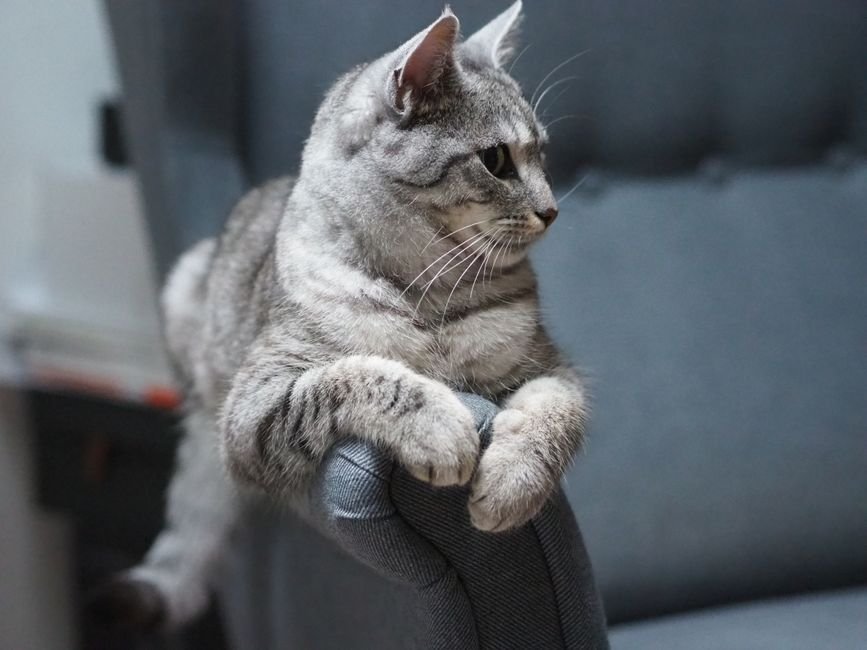
The linen swatch was still sitting on my coffee table the morning I found the first pull. I had kept it around because I liked the color and I liked being right about the color. Four months after the chair arrived, there was a thread standing up off the seat front like a single grey hair, and when I pinched it, about an inch of the weave came with it. Mabel had been going at the same edge on her way down from the windowsill. That swatch went in the trash and I started paying attention to fabric in a way I never had before.
The linen lasted about four months
Loose natural weaves feel wonderful and look better than anything else in a room with real daylight. They also give a nail something to hook. That is the whole story. A claw does not need to slash anything. It only needs to slide into a gap between two threads and then move sideways, and the thread comes up as a loop. Once there are loops, they catch on everything, including the animal that made them.
The chair is still in my house. It sits by the window with a folded quilt over the seat, which is a polite way of saying it has been demoted. I do not regret the chair as much as I regret the confidence. I had been told that this particular weave was durable, and it is durable against people. It was never durable against a cat coming down off a ledge in a hurry.
Velvet surprised me, and then it did not
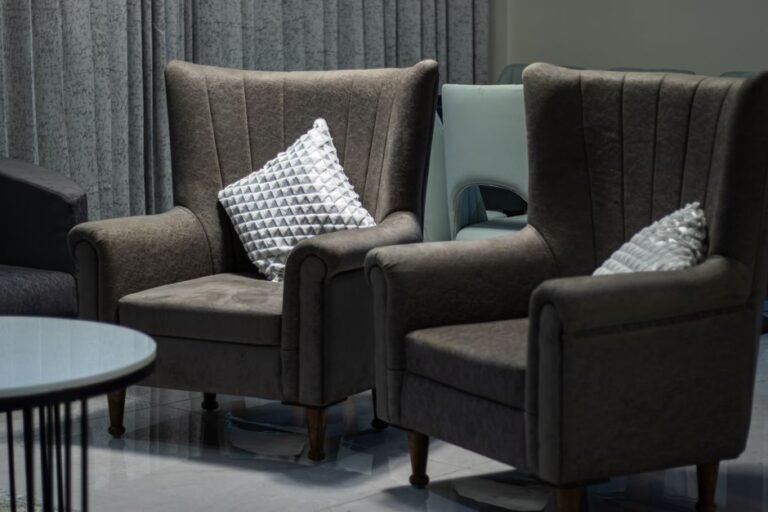
I inherited a small velvet armchair from my aunt and expected it to last a month. It has outlived two other pieces. The pile is short and dense, so there is no gap to hook, and a nail mostly skates across it. Dog hair also brushes off it easily, which I did not anticipate.
What velvet does badly is show everything else. Rowan’s oils have darkened one side of the seat where he leans, and the pile there lies permanently flat in a shape that is unmistakably a dog. Water marks it. A damp paw print dries into a pale ghost that takes real work to blend out. So the trade is real. Velvet resists the damage that ends a fabric and collects the damage that just makes it look tired. I would take that trade again, but I would take it knowing what I was accepting.
Leather is not the exit everyone promises
Every time I mention upholstery, someone tells me to just get leather. I had a leather ottoman for three years, so I have opinions. Leather does not hook. Nothing pulls into a loop, and hair sweeps off it with a dry cloth in about ten seconds. That part of the promise is true.
The part nobody mentions is that leather records. Every nail that drags across it leaves a fine line, and those lines do not close. On the ottoman they built up into a hazy scuffed field on the top surface, and one deeper puncture from Rowan stepping up with his weight on one paw never went anywhere. Some people call the result patina and genuinely like it. I liked it for two years and then I did not. Thicker, more textured hides hide the lines better than a smooth, corrected surface, which is the one detail I wish someone had told me before I bought.
Tight and flat beat everything else I tried
If I had to compress four rounds of upholstery into one sentence, it is this. The tighter and flatter the weave, the longer the piece looks like itself. Anything with a loop in it, anything with a nubby raised texture, anything where you can see individual threads standing proud of the surface, will start to fuzz where the animals contact it.
A salesperson will usually offer you a durability rating at this point. That number comes from a machine rubbing a pad across a swatch. It describes what happens when a person slides around on a seat in jeans. It has nothing to say about a single nail entering the weave and lifting one thread, which is the thing that actually ends fabric in my house. I stopped asking about the rating and started dragging my thumbnail across the corner of every sample I was allowed to touch. If the surface moved, I put it back.
Color and pattern do work no fiber can
The most useful upholstery decision I have made had nothing to do with material. My current sofa is a mid tone with several colors twisted into the yarn, and it hides both a black dog and a grey cat almost completely. The pale chair by the window shows every hair from across the room and always will.
Texture that is already busy also disguises the fuzzing that comes later. A flat solid weave shows a worn patch as an obvious change in surface. A yarn with variation in it absorbs that patch and reads as slightly used rather than damaged. This is not a trick that keeps furniture new. It is a trick that buys you a couple of years of not noticing, and honestly, not noticing has value.
How I shop for fabric now
I bring a swatch home and leave it on the floor for a week before I commit to anything. It gets walked on, slept near, and in one case carried off, which told me more about that fabric than the showroom did. I check whether the covers come off, because a fabric I can wash is worth more to me than a fabric that resists staining. And I have stopped asking which option will survive.
None of them survive. They fail in different ways at different speeds, and the useful question is which kind of failure I can live with looking at every single day. For me that is a tight, mid tone, multi colored weave with zippers, and an acceptance that in three years the arm nearest the window will not match the rest of it.