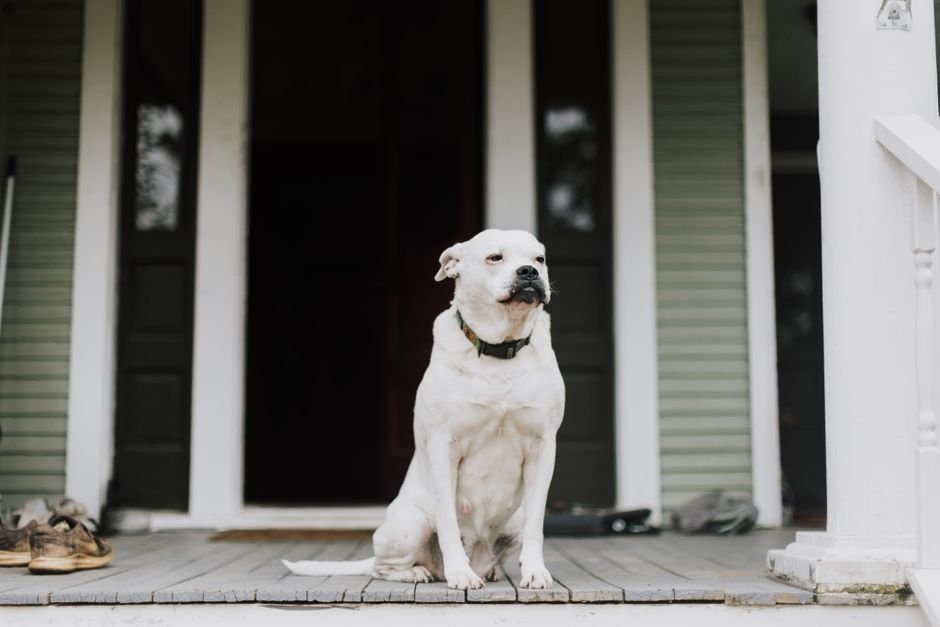
The Worn Spot By The Front Door
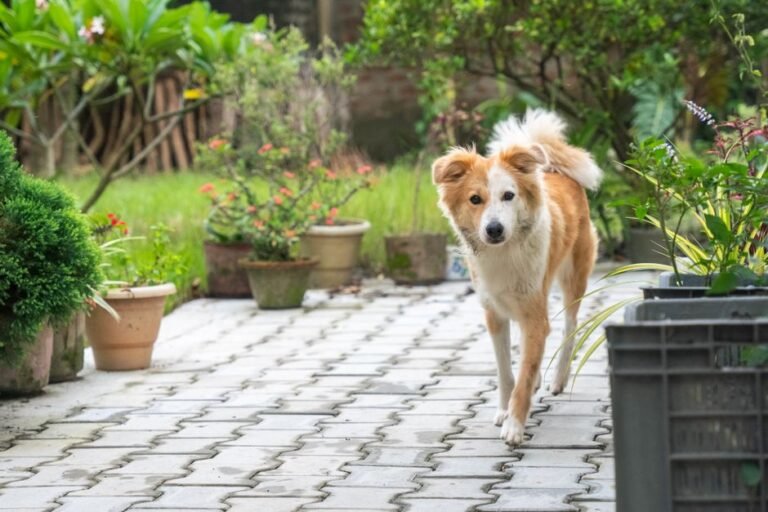
There is a spot on our floor, about a foot inside the front door, where the finish has gone slightly matte compared to everything around it. It is roughly the size of a dinner plate. That is where the dog stands while I put my shoes on, and he has been standing there almost every weekday for two years, and apparently that is enough to change hardwood.
I noticed it in March when the afternoon light came in at a low angle and caught the dull patch. I sat down on the stairs and looked at it for a while. It is the clearest physical record in this house of what our days actually look like.
The Eleven Minutes Before The Door
I have timed it, which tells you something about me. From the moment I pick up my keys to the moment the door closes is about eleven minutes, and roughly nine of those minutes are things the dog can hear.
He does not react to the alarm, or to me getting dressed, or to breakfast. He reacts to the closet door, because that is where the jacket is. Then he reacts to the sound of the laptop bag zipper. Then keys. By the keys he is already in his spot on the floor, and from there he does not follow me around, he just watches the sequence complete.
What I got wrong for a long time was thinking of this as one moment, the leaving. It is not. For him it is a long slow ramp with about five recognizable stages, and I am the only one in the house who experiences it as a single event called going to work.
The Cat Does Not Participate
The cat has never once come to the door. Not to say goodbye, not to try to get out, not to observe. As far as I can tell, my departure is genuinely uninteresting to her.
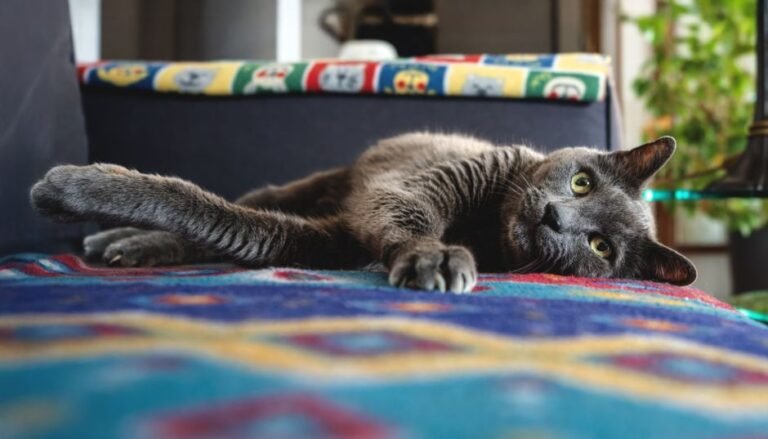
She does have a departure ritual, though. It is just aimed at the wrong end. About twenty minutes before I usually leave she relocates to the arm of the couch nearest the window, and she is still there when I get back, or at least she is there again. Whether she spends eight hours there or eight minutes is one of the great unanswered questions of my household.
Living with a dog and a cat at the same time has mostly been an education in how differently two animals can experience the exact same empty house. One of them is clearly tracking my absence as an event with a shape. The other one appears to be running an entirely separate day that happens to occur in the same building.
The Camera I Bought And Then Stopped Watching
Six months in I got an inexpensive little camera and pointed it at the living room, because I wanted to know what happened after the door closed. I am not going to name what I bought, partly because I do not think the specific one matters and partly because I genuinely do not remember.
Here is what I learned. For about the first stretch after I leave, the dog stays near the door. Then he moves to the couch. Then, and this is the part that surprised me, he mostly sleeps. Long stretches of nothing. He gets up when a truck goes past and lies back down.
I watched it obsessively for two weeks and then almost never again, which I think is the normal arc. The camera answered the question I actually had, which was whether he spent the whole day distressed, and the answer for our particular dog was no. I want to be careful here: that is our dog. Some dogs genuinely do struggle when alone, and that is a real medical and behavioral issue that a vet or a qualified behaviorist should be looking at, not something you diagnose from your own phone footage. If what you see on the camera worries you, that is a reason to call someone, not a reason to read more blogs. Including this one.
Coming Home Is Not One Event, It Is Three
The first thirty seconds are the loud part. That part gets all the attention because it is the part people film.
The second part happens about five minutes later, once the greeting has burned off, and it is quieter and honestly better. He goes and gets something, usually the same rope thing, and brings it over and drops it and then does not do anything with it. He is not asking to play. He seems to be marking the transition.
The third part happens maybe forty minutes in, when I have sat down. That is when the cat finally shows up. She has been waiting for the house to go back to being still. She does not want to be part of the arrival, she wants to be part of what comes after it, and if I try to greet her during the first two phases she leaves the room.
Asking Someone Who Actually Knows
Early on I got worried about the door spot and the waiting, and I asked our vet whether that much attention to my leaving was a problem in itself.
The thing she said that stuck with me was that anticipation and distress are not the same thing, and that the questions worth asking are about what happens after the door closes rather than before. Is the animal settling. Is there damage, or accidents, or vocalizing that neighbors hear. Is the animal eating normally during the day. Those are observable things, and they are the things she wanted to know about.
She also said that if any of that had been happening, the next step would be an actual consult with a professional, not adjustments I read about somewhere. I have hung onto that framing. My job is to notice accurately and describe it well to someone qualified. It is not to run experiments on an animal who cannot tell me whether they are working.
What Changed In The House Itself
The furniture moved. That is the part I did not expect.
The couch is angled differently now than it was three years ago, because the arm needed to face the window for the cat. There is a blanket that lives permanently on one cushion and has stopped being a decision. My keys hang on a hook further from the door than they used to, purely so the keys sound does not start the ramp before I am ready for it.
None of this was planned. Every single piece of it is a small accommodation that made a repeated moment smoother, and there have been about a thousand repetitions, and the house slowly bent around them. That matte patch on the floor is just the most literal version. Two animals rearranged my mornings, my evenings, and eventually the actual room.