My House Looks Like Animals Live Here
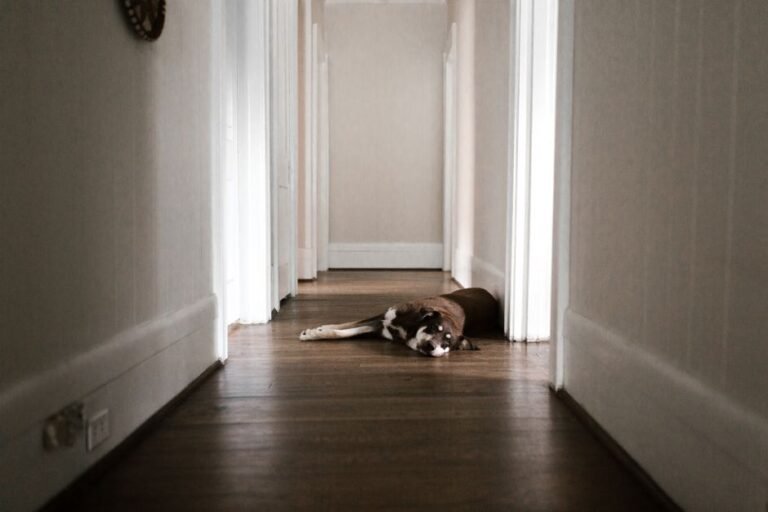
A friend stood in my living room last spring, looked around for a second, and said it looked like a dog lived here. She said it warmly. She was scratching Rowan’s ear at the time. And I spent the next two days turning it over like something sharp I had swallowed.
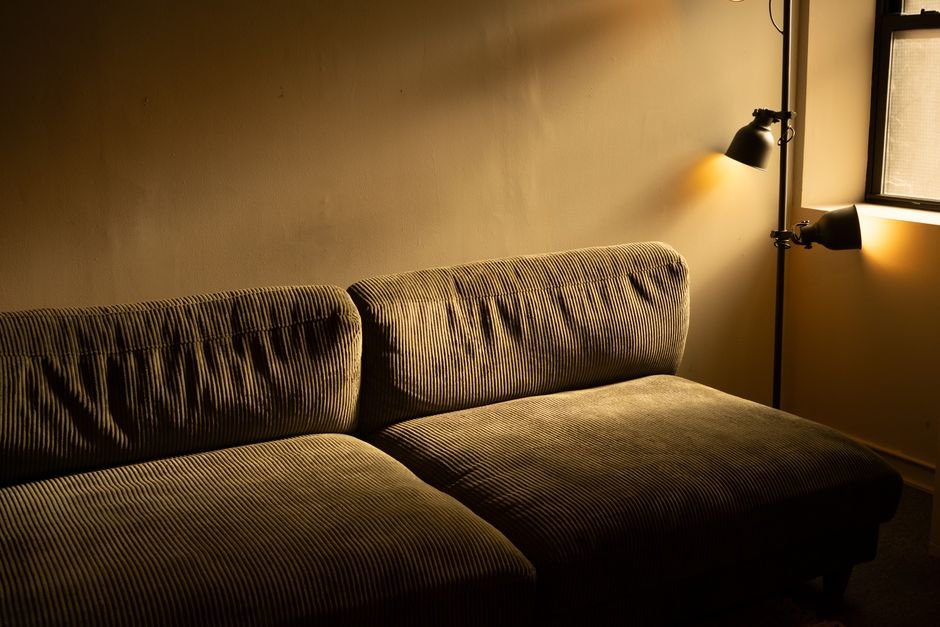
I know exactly what she was looking at. Hair on the near cushion. A blanket that has lost its shape. A water bowl on a mat by the kitchen door in the middle of the walkway. A worn patch low on the sofa. A rug that does not quite match the room because it was chosen for being washable.
All of it accurate. None of it hidden. And it took me most of a year to stop hearing it as a verdict.
The House I Kept Preparing For
What I was doing, before I noticed I was doing it, was maintaining my home for visitors who mostly did not come.
There is a version of a living room that exists for the twenty minutes before somebody arrives. The bowls get moved, the blanket gets folded, the toys go in a basket, the throw gets straightened over the worn arm. I was doing a version of that every day, not for guests, but for a hypothetical observer who would walk in and judge. I have no idea who I thought that was.
The tell was that the house looked best when nobody was in it and worst when it was being used, which is exactly backwards for a room where a person and two animals actually live.
Some Things Are Ugly and I Keep Them Anyway
The water bowl sits in the walkway between the kitchen and the hall. It is the wrong place aesthetically. It is in the traffic path, it is the first thing you see coming in the back door, and I have tried it in four other locations.
Rowan drinks from it in that spot. He drinks noticeably less anywhere else, and I know that because I watched, and because an older dog not drinking enough is a real thing rather than an aesthetic thing. So the bowl stays where it is and the room has a bowl in the middle of it.
Same with the cat tree by the front window. It blocks a third of the light in that room and it is the largest object in it. It is also the only place Mabel spends the middle of the day, and moving it to the corner produced a cat who slept on the kitchen counter instead. I would rather have the tree in the window.
These are not compromises I resent anymore. They are just the terms.
Choosing for Tolerance Instead of Perfection
The practical shift underneath all this was that I started buying things for how they age rather than how they look on the day they arrive.
A fabric with variation in it hides hair. A mid tone hides more than either a very dark or a very light one. A textured surface absorbs small scratches into a pattern that already has business in it, where a smooth painted surface reports every mark individually. A rug that can go in a machine gets washed. A rug that has to be taken somewhere gets a stain that becomes permanent.
None of that is about protection. It is about picking things that fail gracefully, because they are all going to fail. The question was never whether the sofa would show wear. It was whether the wear would read as damage or as use, and that is decided mostly at purchase.
What Actually Bothers Guests
Here is the thing I got wrong for years. Visitors do not care about the scratched arm of the sofa. Nobody has ever mentioned my floors. Not one person has looked at the worn baseboard.
What people notice is smell, and hair on their clothes when they leave. That is essentially the entire list.
Which means my effort had been going almost entirely into the wrong place. Folding the blanket did nothing for anybody. Opening windows for twenty minutes before people arrive does a great deal. Running a rubber brush over the cushion somebody is about to sit on does more than the previous three hours of arranging.
I moved all my before-guests energy from staging to those two things, and it takes less time than what I used to do and works considerably better.
The Line I Still Hold
I want to be careful, because there is a version of this argument that turns into an excuse, and I have met houses that went too far down it.
Accepting that a room looks used is not the same as letting things go. The floor still gets cleaned. Anything wet still gets dealt with immediately, because that is the difference between a mark and a permanent problem. Bedding gets washed on a schedule I actually keep to. The litter situation is not a place I have ever allowed any flexibility at all, both because of how a house smells and because a cat will tell you about a bad arrangement in ways you will like less.
The distinction I have landed on is between wear, which is the record of a life happening in a room, and neglect, which is a different thing that just happens to produce some of the same marks. Wear is fine. I have made my peace with wear.
What My Friend Meant
I asked her about it, months later, which is a slightly ridiculous thing to have done. She did not remember saying it.
When I described the room to her she said it was a nice room, and that she had meant it looked like somebody actually lived in it, and then she asked whether I had been thinking about that for eight months. I said no. I had been thinking about it for eight months.
The room has not changed much since. The bowl is still in the walkway. There is still a dog shaped depression in the blanket and a worn place on the sofa that will get bigger. What changed is that I walk in now and see a room that is being used by everyone who lives here, which is three of us, and only one of us was ever worried about it.