The Vacuum Was Not Broken
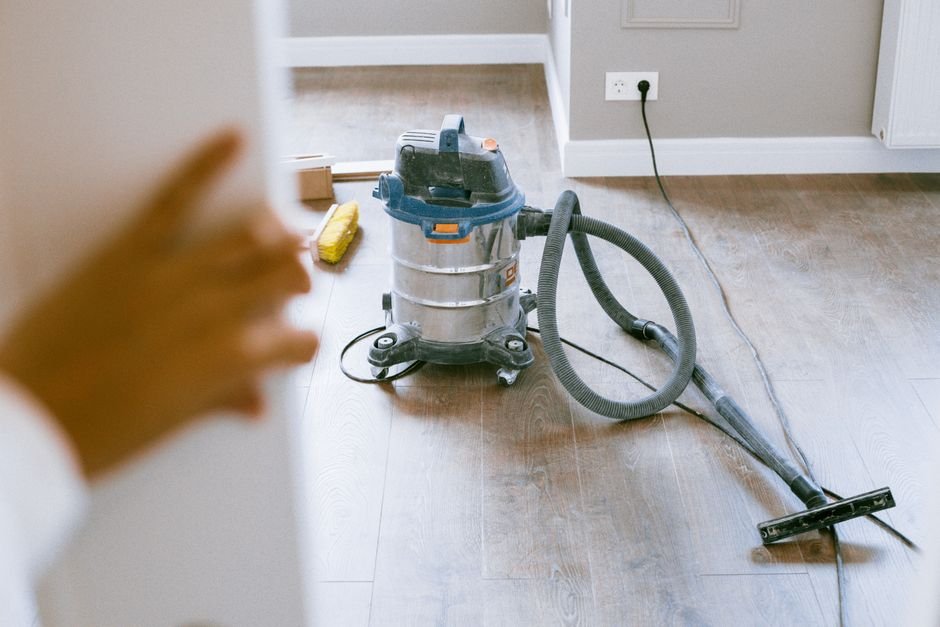
I was vacuuming the hallway on a Tuesday evening and I noticed that the strip of floor behind the machine looked exactly like the strip in front of it. Same grey haze of Rowan’s undercoat worked into the grain of the boards. I went over it again. Then a third time, slower, leaning into it the way you do when you have decided that effort is the missing ingredient. The vacuum was running. It was loud. It was accomplishing nothing.
My first thought was that it had finally died and I was going to have to spend money I had not planned to spend that month. It had not died. It was blocked in two separate places, and I had owned it for over two years without ever opening either one.
The day I nearly replaced a machine that was fine
I took it apart on the kitchen floor because I wanted to be able to tell myself I had tried before I bought a new one. The filter came out the colour of a wet newspaper. It was supposed to be white. I honestly could not tell you what I expected the inside of a vacuum to look like after two years of a shedding dog and a cat, but it was worse than that, and it was uniform, which is what made it invisible. Nothing had failed suddenly. It had been getting slightly worse every single week and I had been adjusting to it without noticing, walking slower, going over things twice, telling myself the floors were just harder to clean than they used to be.
That is the part I want to be honest about. The tool did not break. My sense of what normal suction felt like drifted downward over about eighteen months, and I recalibrated to it instead of investigating it. I had been doing more work for less result for most of a year.
The brush roll had become a solid rope
The second blockage was the brush bar. What came off it was not a tangle. It was a dense grey cord wound so tightly around the bar that it had gone hard, and it had pushed the bristles flat against the housing so they could not reach the floor at all. Rowan’s hair is coarse and Mabel’s is fine, and the fine stuff is what does this. It works its way down under the coarse hair and packs itself in.
I cut it off with scissors, working slowly along the bar and being careful about where the blade was pointing, and it came away in two long pieces like something removed rather than something cleaned. The bristles sprang back up. That alone changed the machine more than anything else I did that night.
I now check it monthly, and I want to be clear that monthly is the plan and not the reality. I probably manage it every six or seven weeks. But the difference between every six weeks and never is enormous, and the difference between every four weeks and every six is small enough that I have stopped feeling bad about it.
Filters fail quietly, which is the actual problem
Mine has no light, no alarm, nothing that tells you the filter is finished. Some machines do. Mine just gradually stops working and lets you draw your own conclusions, and the conclusion most people draw is that the vacuum is old.
What I do now is check it on a date rather than on a symptom, because by the time I can feel the symptom I have already lost weeks of decent cleaning. Whether yours can be rinsed and reused or has to be replaced is genuinely a question for the manual that came with it, and I would not guess on your behalf. Washing a filter that was not designed to be washed is how you turn a recoverable situation into a real replacement. I found that out on a different appliance and I am not eager to repeat it.
The rubber glove trick has a shelf life
Dampened rubber gloves on upholstery genuinely work. I use them on the sofa arm where Mabel sleeps, and they pull up a mat of hair that a vacuum attachment slides straight over. But nobody mentions that gloves wear out for this purpose long before they wear out as gloves. The surface goes slick and slightly powdery after enough washes and it simply stops gripping. It took me an embarrassingly long time to work out that the technique had not stopped working, the glove had.
The other honest note is that it is slow. It is a five minute job on one cushion, my hand aches afterward, and I only do it on the two pieces of furniture that actually matter. I have never once done the whole sofa in one sitting.
Lint rollers, rubber brooms, and what else quietly gave up
The sticky sheet rollers lose their grip in humidity faster than they lose it to use, and a roller left in a warm car through a summer is finished before you touch it. I keep mine indoors now, which sounds obvious and took me two summers to arrive at.
The rubber broom I use on the rugs has lasted better than anything else I own, and the reason seems to be that it has nothing inside it to clog. That has changed how I buy this kind of thing. Fewer moving parts, fewer places for hair to hide, easier to see when it is dirty.
Brushing the animals is its own category and I will not pretend to be an expert on it. If the coat itself changes, if there are bare patches, or if you find mats that go right down to the skin, that is a conversation with a vet and not a shopping decision. I have made the mistake of treating a grooming problem as an equipment problem before.
What I check now, and what I still let slide
Filter and brush bar on a rough monthly cycle. Gloves replaced when they stop gripping rather than when they tear. That is genuinely the whole system, and it takes maybe fifteen minutes.
What I let slide is everything else. I do not clean the vacuum’s outer housing, I do not descale anything, and the attachments live in a drawer in whatever state they were last used. The lesson was not that I need to be more diligent in general. It was narrower than that: with two shedding animals, the parts of a cleaning tool that touch hair will clog, they will clog silently, and the machine will not tell you. You find out by opening it, or you find out by standing in a hallway on a Tuesday wondering why the floor still looks like that.